Introduction:
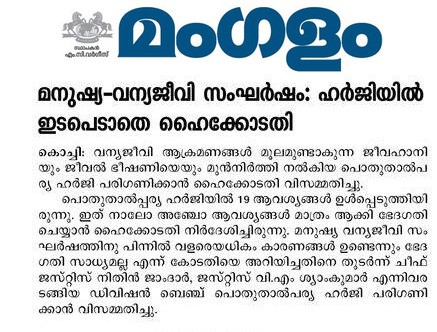
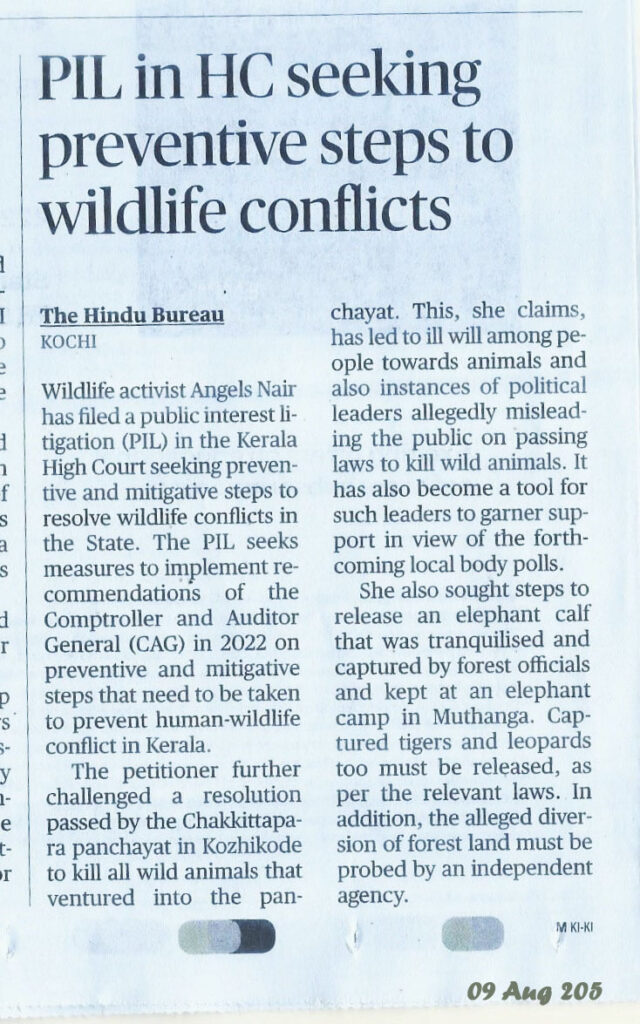
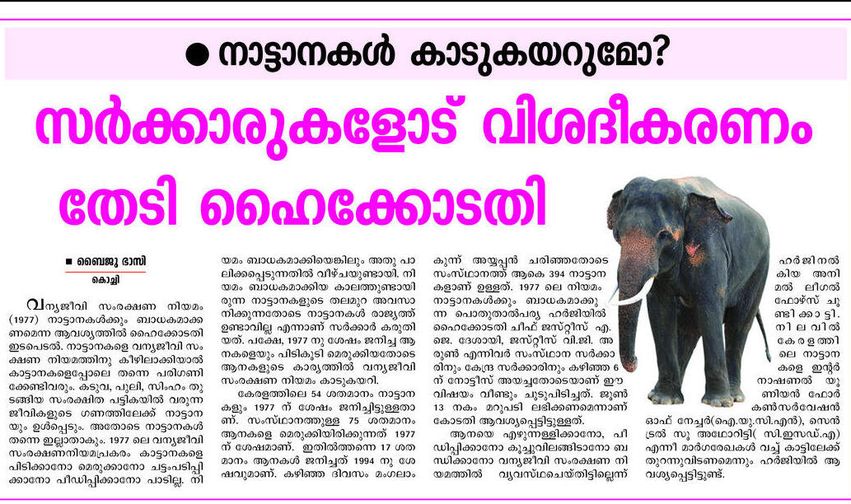
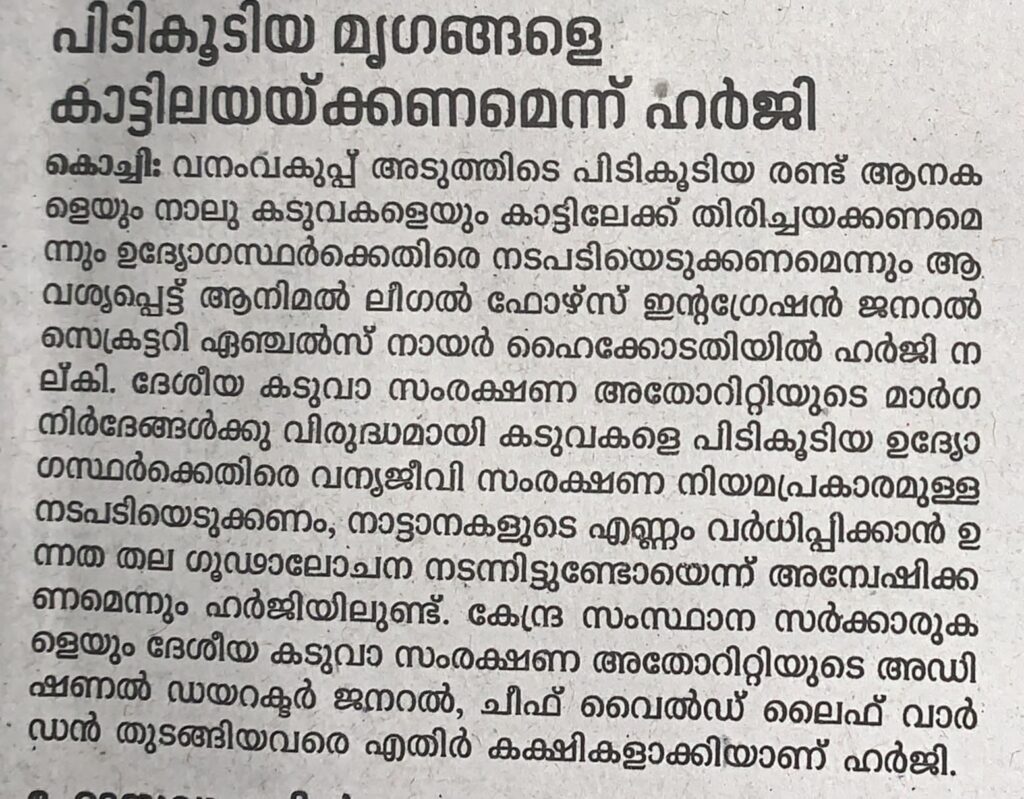
In a recent case before the Kerala High Court, Angels Nair v. Union of India and Others (WP (PIL) No. 98 of 2025, 2025 LiveLaw (Ker) 702), the petitioner appeared in person, urging the Court to address an array of wide-ranging issues concerning wildlife protection, ethical media representation of animals, and the regulation of public speech on wildlife. The Public Interest Litigation (PIL) sought nineteen separate directions, including the implementation of the Comptroller and Auditor General (CAG)’s recommendations on preventive and mitigative measures for human-wildlife conflict, and guidelines for central and state governments, media bodies, and even the Election Commission of India (ECI), to ensure responsible discourse surrounding wildlife. The Division Bench, comprising Chief Justice Nitin Jamdar and Justice Syam Kumar V.M., however, declined to entertain the PIL on the ground that it contained overly broad and diffuse prayers that would not yield any meaningful judicial intervention. The Court advised the petitioner to redraft the PIL with precision and clarity, emphasizing that public interest litigations should be structured, specific, and judicially manageable for effective adjudication.
Arguments Presented by the Petitioner:
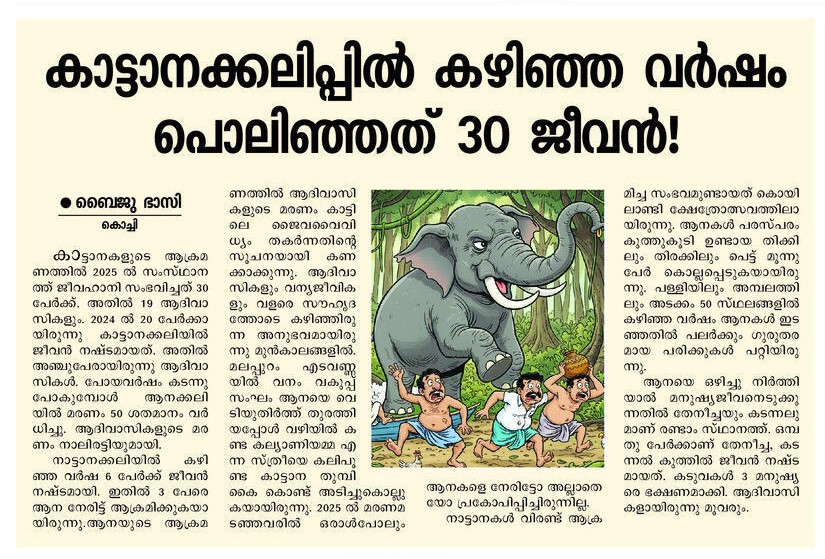
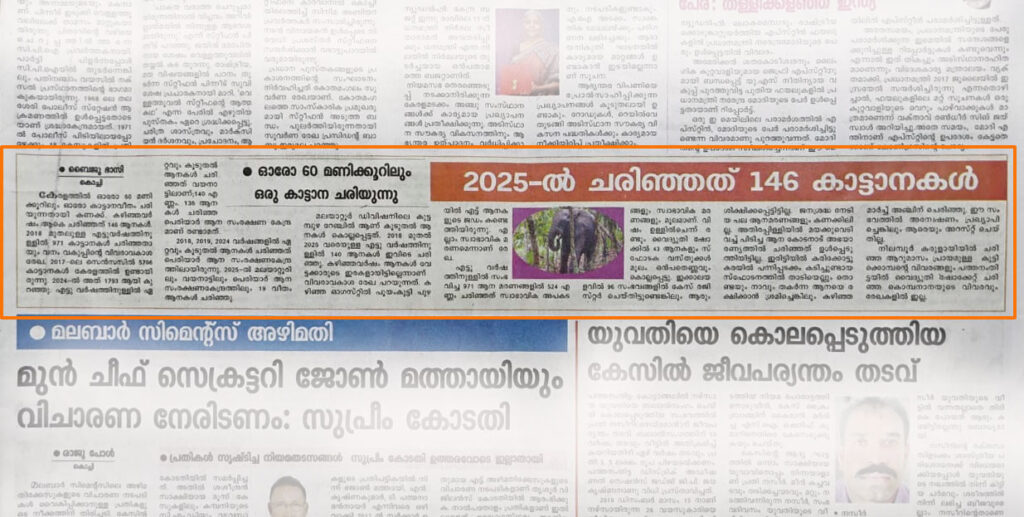
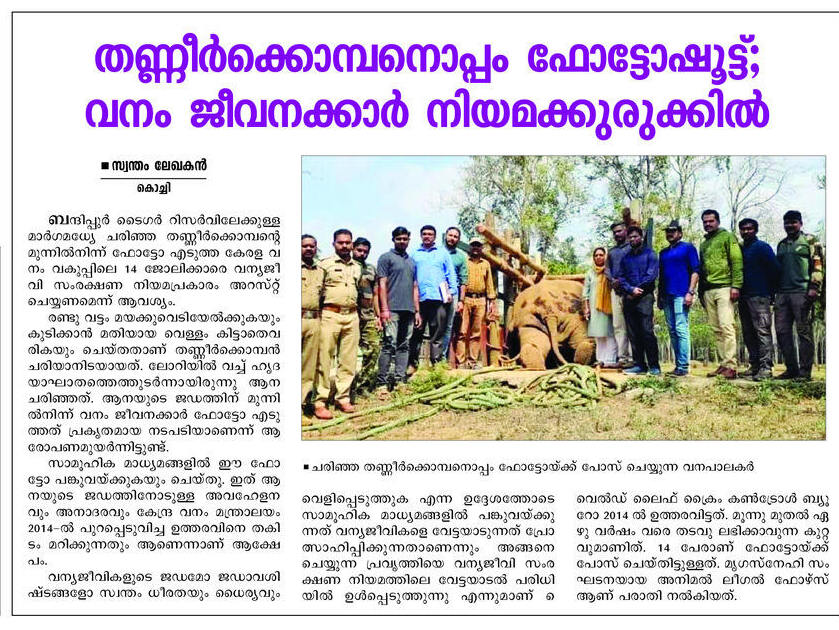
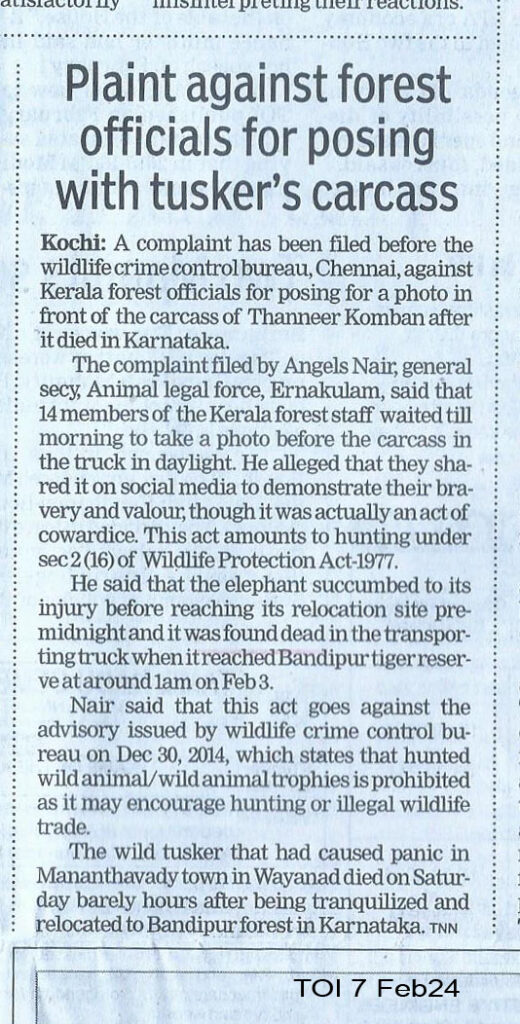
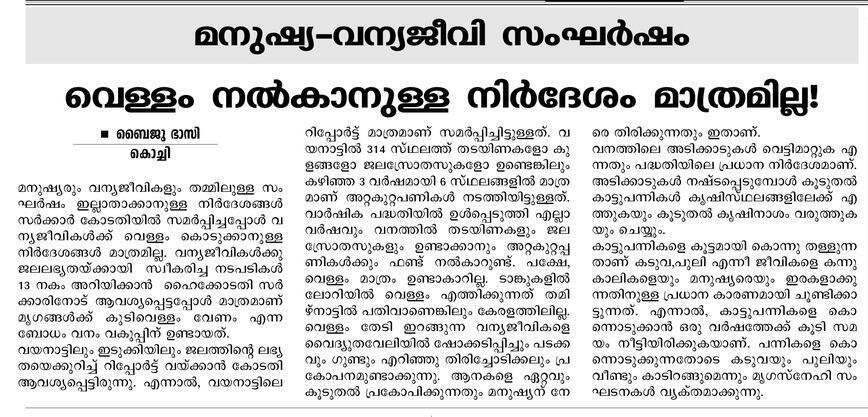
The petitioner, appearing in person, submitted before the Court that the PIL was motivated by growing concerns over escalating human-wildlife conflicts in Kerala and across the nation. He highlighted that the loss of forest cover, habitat fragmentation, and irresponsible human intrusion into wildlife zones had triggered increased encounters between humans and wild animals, often leading to fatalities, retaliatory killings, and heightened hostility towards wildlife species. Referring to the Comptroller and Auditor General (CAG)’s report dated March 31, 2022, the petitioner urged the Court to direct both the Central and State Governments to immediately implement the preventive and mitigative measures recommended therein. The petitioner stressed that despite multiple warnings and recommendations from environmental experts, the authorities had failed to frame effective rules and policies to prevent human-wildlife conflicts, protect forest corridors, and ensure the humane treatment of animals under the Wildlife Protection Act, 1972.
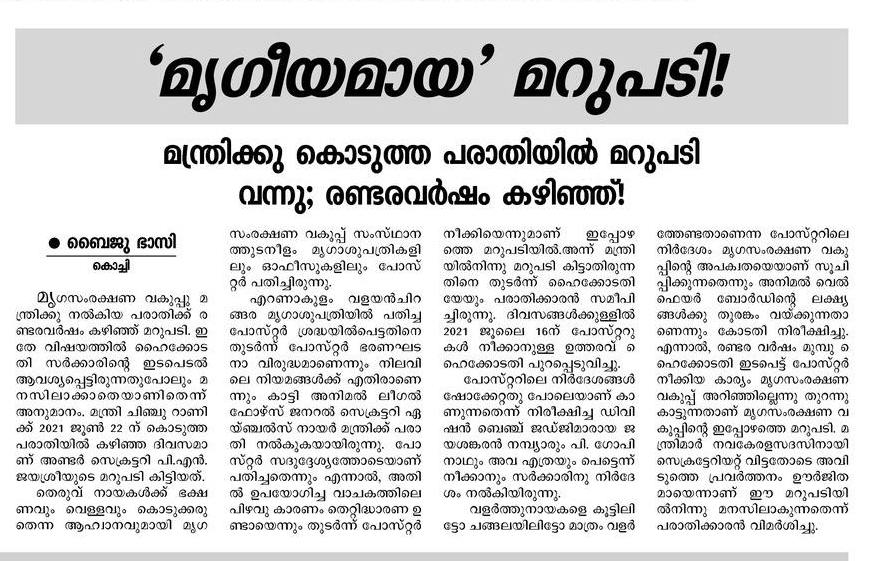
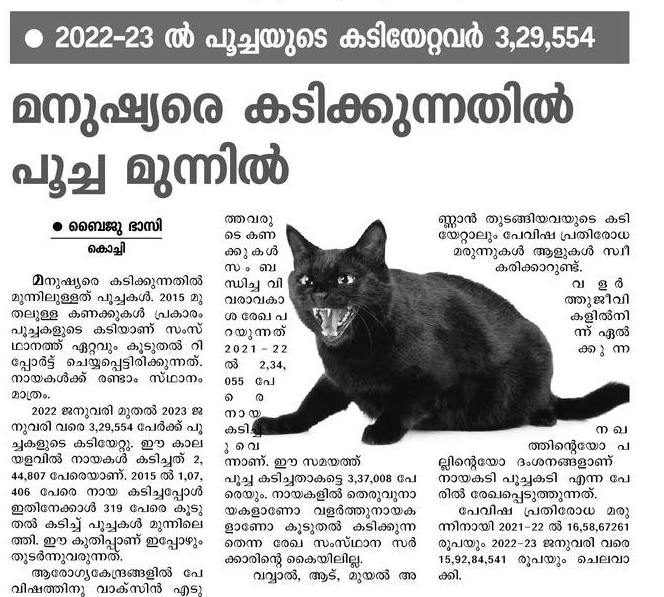
Further, the petitioner made extensive pleas concerning the portrayal of wildlife in media and public discourse. He prayed for directions to the Central and State Governments to formulate statutory rules to restrain and prohibit the publication of any audio-visual or textual content that used derogatory or violent expressions such as “kill,” “dangerous,” or “attack,” which, according to him, reinforced negative perceptions against wildlife. He contended that such language not only diminished compassion toward animals but also promoted hostility among the public, thereby aggravating the human-wildlife conflict. He sought directions to the Press Council of India to prevent newspapers and media outlets from publishing content that portrays wild animals in discourteous or violent terms, as such portrayals instigated fear and resentment among citizens.
In addition to media regulation, the petitioner’s PIL sought to impose obligations on the Election Commission of India (ECI) to prevent political leaders and candidates from making speeches that turned public sentiment against wildlife or encouraged harm to animals for populist appeal. The petitioner argued that wildlife protection is not merely a statutory mandate but a constitutional duty under Article 48A and Article 51A(g) of the Constitution, which obligate both the State and citizens to protect and improve the natural environment and safeguard living creatures. He emphasized that political rhetoric and sensational media coverage often portrayed animals, such as elephants, tigers, and leopards, as threats rather than as victims of habitat destruction and human negligence.
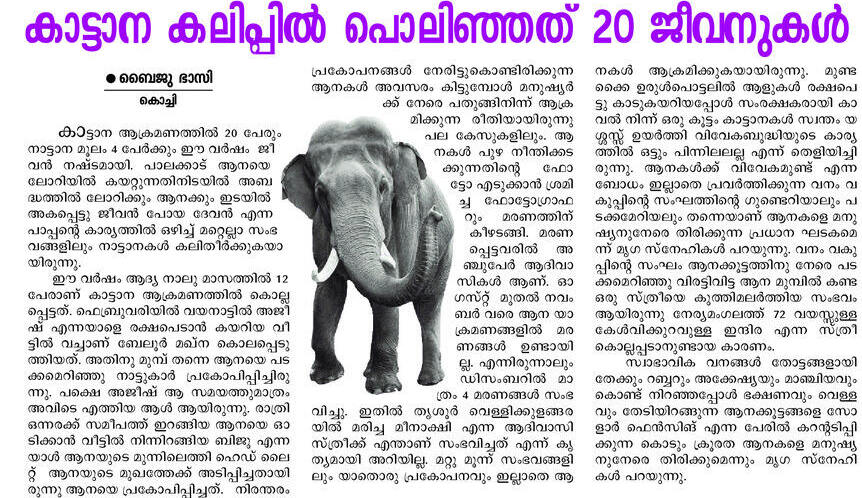
The petitioner also prayed for a judicial direction to the Central Government to develop national-level ethical guidelines for public communication related to wildlife, to be implemented by all public broadcasters, news agencies, and political platforms. He argued that in the absence of a clear framework, irresponsible comments and depictions in social and mainstream media fostered public intolerance toward wildlife conservation efforts. He further urged the Court to take suo motu cognizance of the deteriorating human-wildlife relationship in Kerala, citing several recent incidents of elephant attacks and retaliatory killings of animals that had sparked public outrage and anti-wildlife sentiment.
When the matter was initially taken up on August 12, 2025, the Bench, after perusing the PIL, noted that the petition contained nineteen prayers of diverse nature, extending from policy directives to media censorship and election campaign restrictions. The Court observed that while the issues raised were significant, the PIL lacked focus and failed to identify specific causes of action or responsible authorities for each prayer. The Court, in a compassionate tone, advised the petitioner—who was not legally trained—to seek professional assistance in redrafting the PIL, stressing that a public interest litigation, to be effective, must be “drafted in a precise and targeted manner,” ensuring that judicial intervention could yield tangible results. The Bench expressed that dealing with a petition as loosely structured and overreaching as the one presented would not lead to meaningful adjudication or policy advancement.
Arguments of the Respondents:
The respondents, represented by Advocates R. Prem Sankar, M. Ajay, Ashok M. Cherian (Additional Advocate General), and T. S. Shyam Prasanth (Senior Government Pleader), argued that while the concerns raised by the petitioner were socially relevant, the PIL overstepped the permissible boundaries of judicial intervention under Article 226 of the Constitution. The State submitted that wildlife protection and the management of human-animal conflict already fall within the purview of specialized authorities such as the Forest Department, Wildlife Boards, and the Ministry of Environment, Forest and Climate Change (MoEFCC). The respondents contended that the petitioner’s request for the Court to frame media and electoral guidelines infringed upon legislative and executive domains, violating the doctrine of separation of powers.
The State further argued that the Wildlife Protection Act, 1972 and related rules already provide for humane and scientific management of wildlife conflicts, and the government continuously reviews and updates its measures based on expert inputs. The respondents pointed out that the petitioner’s prayers extended to regulating the language of media publications and election speeches—an area constitutionally protected under Article 19(1)(a) guaranteeing freedom of speech and expression. Any judicial directive restraining speech, unless justified by law under Article 19(2), would amount to unconstitutional censorship. The Press Council of India and Election Commission of India already have their regulatory mechanisms and codes of conduct, the respondents maintained, and any interference by the judiciary to dictate speech content would not be in consonance with settled constitutional jurisprudence.
The respondents also argued that the multiplicity and vagueness of the prayers rendered the PIL unmanageable. The petition not only demanded implementation of the CAG’s report—a matter within administrative discretion—but also sought wide-ranging directions to multiple authorities, without identifying specific violations or derelictions of duty. The State further emphasized that PILs must be confined to matters where the rights of marginalized sections or environmental interests require judicial protection, but they cannot become vehicles for abstract or speculative directives spanning across several constitutional and statutory bodies.
Court’s Judgment and Reasoning:
After considering the submissions, the Division Bench of Chief Justice Nitin Jamdar and Justice Syam Kumar V.M. delivered its order on October 28, 2025, holding that the petition, in its present form, was not maintainable. The Court reiterated that the PIL, containing nineteen prayers of diverse nature, lacked precision, focus, and judicial workability. It observed that while the issues highlighted were important, an omnibus PIL seeking sweeping reforms across various unrelated domains—ranging from wildlife management to media regulation and electoral conduct—cannot be effectively adjudicated in a single proceeding.
The Bench remarked that for a PIL to yield a constructive outcome, it must be anchored on specific facts, supported by relevant materials, and confined within the judicially enforceable domain. “For an effective intervention,” the Bench stated, “the petition has to be drafted in a precise manner. The petition contains nineteen prayers of diverse nature, and it is quite clear that dealing with the petition as presented will not lead to any meaningful intervention.” The Court recalled its earlier observation made on August 12, advising the petitioner to revise the petition with professional assistance. However, upon being informed by the petitioner on October 28 that it was not possible to make such amendments, the Court concluded that it had no option but to dispose of the matter.
In its final order, the Court observed: “We are not inclined to entertain the petition with such wide-ranging prayers. Entertaining the petition with such prayers will not lead to any fruitful intervention.” The Bench clarified, however, that it was not dismissing the cause itself but merely declining to proceed with the present petition due to its lack of clarity and precision. The Court expressly left the door open for the petitioner to approach it again with a properly drafted petition containing specific and manageable prayers. “As and when the petitioner files a proper petition/petition with precise prayers, the Court may consider taking up the cause,” the Bench concluded, thereby disposing of the petition while keeping the cause open.
The judgment reflected the Kerala High Court’s consistent judicial philosophy that PILs should not be used as omnibus platforms to seek policy-level interventions across multiple administrative sectors. The Court reaffirmed that the Public Interest Litigation jurisdiction is a powerful but delicate instrument meant to correct administrative injustices or enforce constitutional rights, not to govern policymaking processes. The Bench’s observations underscored the need for judicial economy and discipline, especially when courts are confronted with expansive petitions that, while well-intentioned, are legally unfocused and practically unmanageable.
Through this order, the Kerala High Court also subtly emphasized the importance of balancing public concern with judicial restraint. It recognized that issues such as human-wildlife conflict demand coordinated action between administrative authorities, environmental experts, and community organizations rather than purely judicial directives. The Bench, while declining to entertain the PIL, nevertheless encouraged the petitioner to pursue the cause in a structured and actionable manner, reflecting the Court’s openness to address genuine environmental issues if properly presented.
In essence, the Kerala High Court’s decision acts as a reminder that while the judiciary plays a vital role in protecting environmental and animal rights, it must function within constitutional boundaries, respecting the roles of the executive and legislature. The dismissal of the PIL in its present form thus upholds procedural discipline without undermining the seriousness of the issue at hand—allowing space for more focused and legally sound advocacy for wildlife protection in the future.